Vexulaniqomin
Motion Asset
Motion Asset
Couldn't load pickup availability
- 📄 Digital file available after purchase
- 📚 Long-term availability
- 🔒 Secure checkout
- 🗓️ Content updated in 2026
Self-paced learning overview
Share
Problem Statement
As Python programs handle multiple operations, coordinating their execution can become challenging.
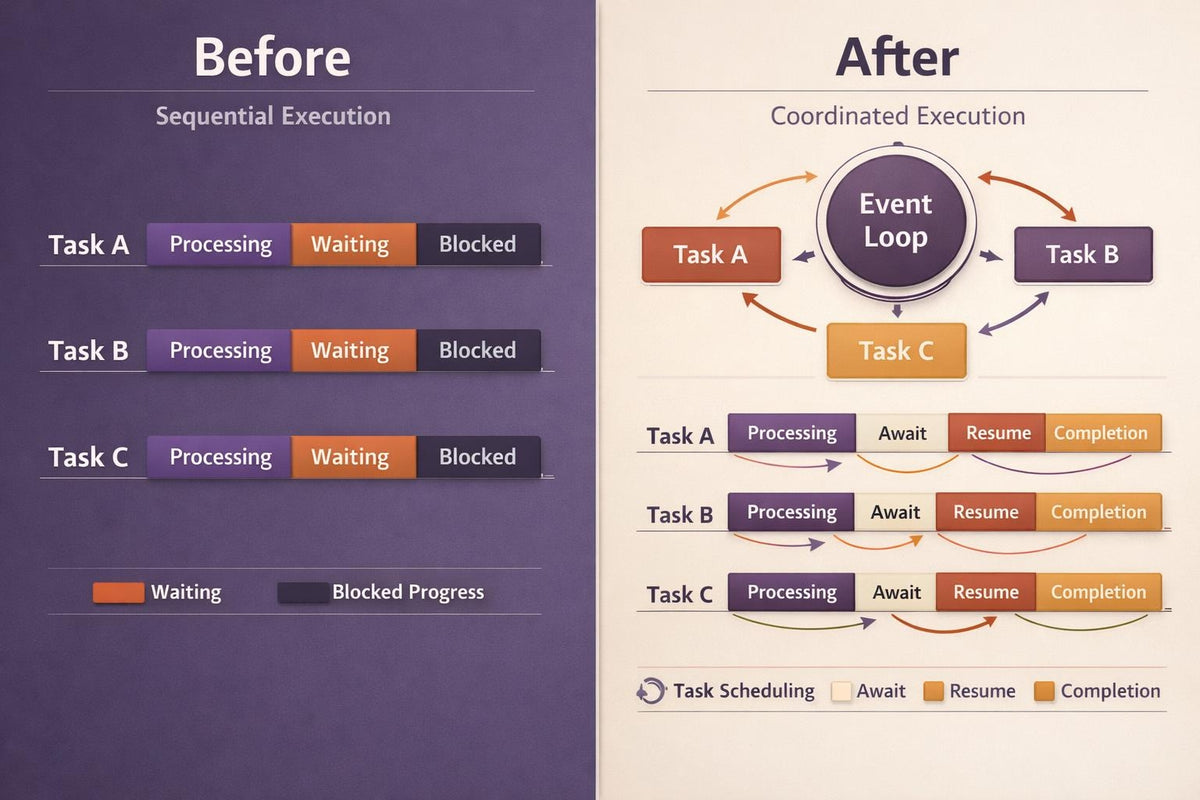
Learners may encounter difficulties understanding why certain operations block program execution, how asynchronous functions differ from regular functions, or how multiple tasks share information.
Managing task cancellation, unexpected exceptions, and operation ordering introduces further complexity.
Without a clear understanding of execution flow, concurrent programs can become difficult to inspect, maintain, and test.
Solution
Motion Asset introduces asynchronous programming through a structured sequence of connected modules.
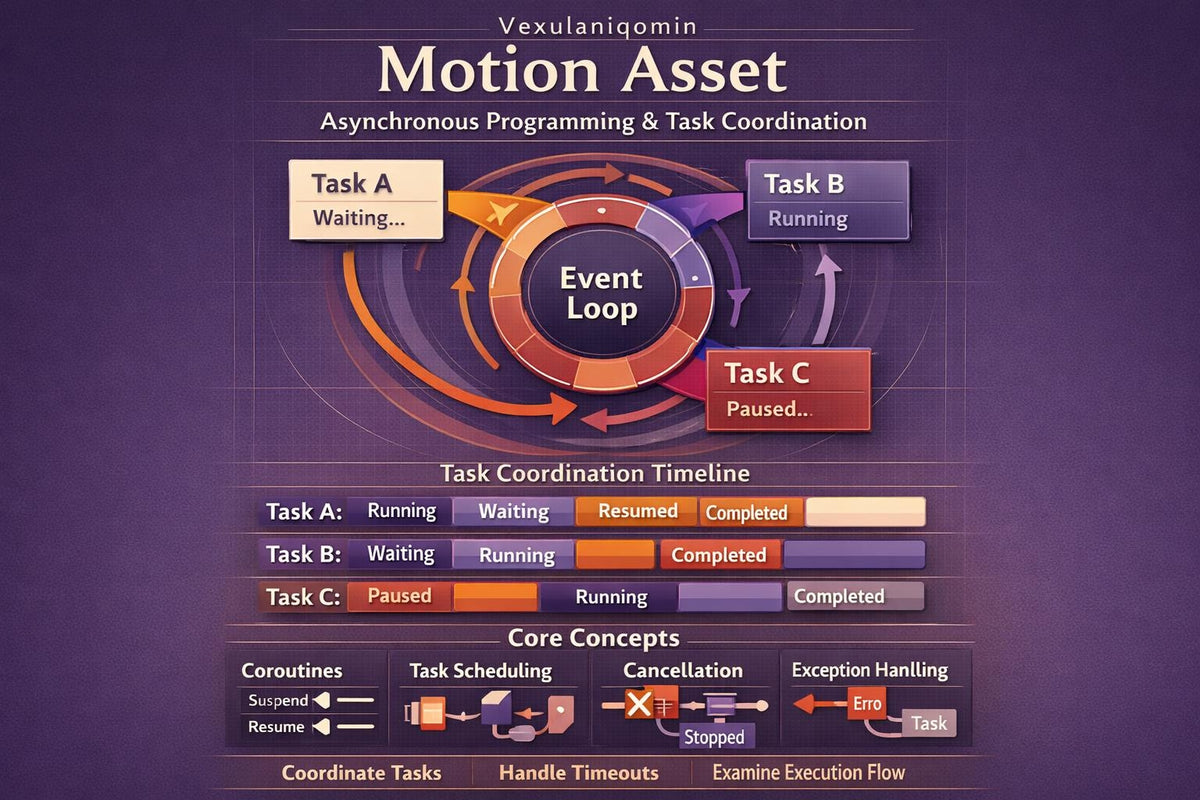
The course explains how coroutines, event loops, and asynchronous tasks operate within Python programs. Learners examine task scheduling, waiting behavior, exception handling, and methods for coordinating related operations.
Practical exercises demonstrate how asynchronous techniques can be applied to small programs while maintaining readable code and defined task responsibilities.
What's Inside
- Introduction to concurrency and asynchronous programming.
- Differences between synchronous and asynchronous execution.
- Understanding coroutines and asynchronous functions.
- Event loops and task scheduling.
- Working with async and await expressions.
- Creating and coordinating multiple tasks.
- Handling asynchronous exceptions.
- Task cancellation and timeout management.
- Managing shared state and operation ordering.
- Introduction to asynchronous iterators and context managers.
- Testing and debugging asynchronous code.
- Practical exercises involving task coordination.
- Certificate of completion.
Who Is This For?
Motion Asset is intended for learners familiar with Python functions, object-oriented programming, generators, and introductory testing techniques.
It is suitable for individuals interested in asynchronous execution, task coordination, and understanding how Python manages operations involving waiting and concurrent activity.
What You'll Learn
Through the course materials and exercises, you'll explore how to:
- Explain synchronous and asynchronous execution models.
- Define and execute asynchronous functions.
- Understand coroutine behavior and event loops.
- Create tasks and coordinate their execution.
- Use async and await expressions appropriately.
- Handle exceptions within asynchronous operations.
- Apply cancellation and timeout techniques.
- Identify blocking operations in asynchronous code.
- Examine shared-state and task-ordering concerns.
- Work with asynchronous iterators.
- Write tests for asynchronous functions.
- Develop small Python programs involving coordinated tasks.
Refund Policy
14-Day Refund Request Period
Motion Asset includes a 14-day refund request period. Learners may submit a refund request within 14 days of purchase, subject to the eligibility requirements and conditions described in the store's published refund policy.
Purchase Information
Learners can review the course topics, included materials, and learning objectives before purchasing. Refund eligibility and processing follow the published policy.
What format are the courses provided in?
What format are the courses provided in?
Our courses are provided as digital learning materials organized into structured sections. Each tier contains explanations, practical examples, and exercises related to its programming topics.
Can I study at my own pace?
Can I study at my own pace?
Yes. Our course materials are designed for independent study. You can read through the modules, revisit individual concepts, and complete exercises according to your own schedule.
Do I need previous programming knowledge?
Do I need previous programming knowledge?
The required background depends on the course tier. Introductory materials focus on foundational concepts, while later tiers explore more detailed programming topics. Each course description explains its intended audience.