Vexulaniqomin
Flux Module
Flux Module
Couldn't load pickup availability
- 📄 Digital file available after purchase
- 📚 Long-term availability
- 🔒 Secure checkout
- 🗓️ Content updated in 2026
Self-paced learning overview
Share
Problem Statement
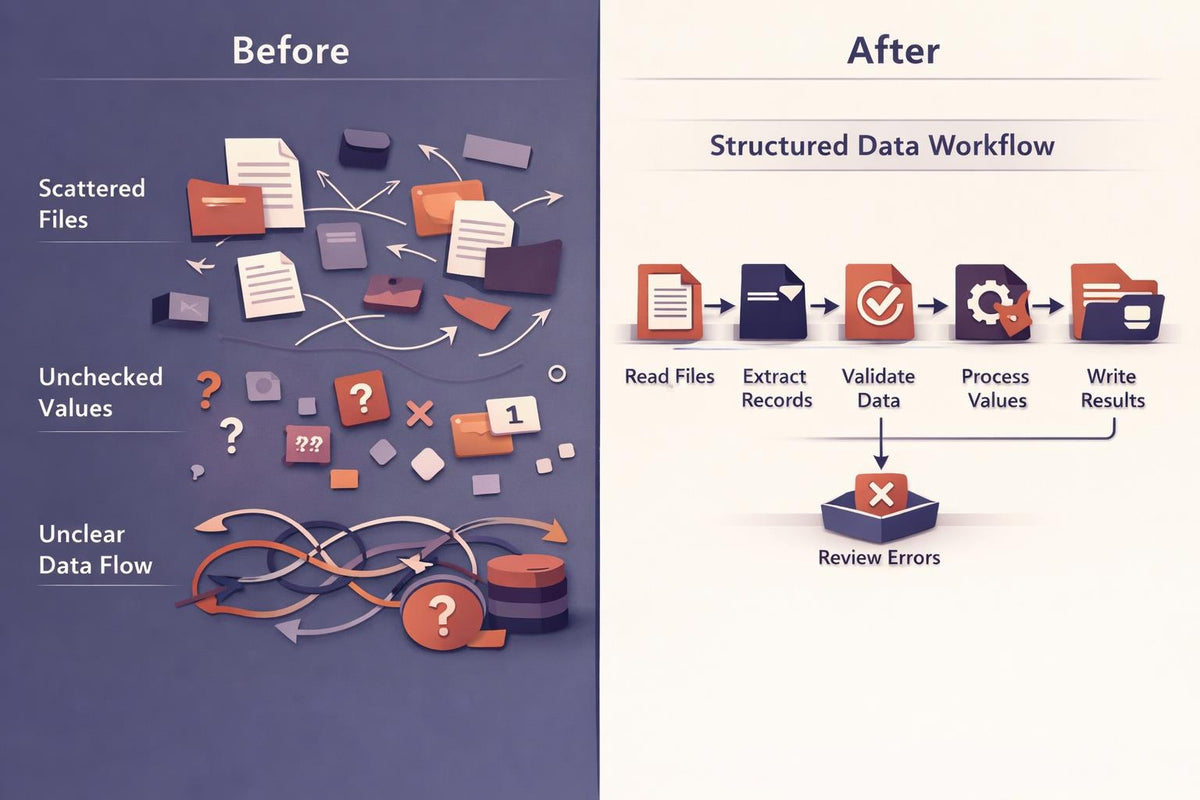
As Python programs become more detailed, keeping all instructions within a single code section can create organizational difficulties.
Learners may encounter repeated operations, confusing variable relationships, or functions that perform several unrelated tasks. Understanding how to divide a program into smaller components can also be challenging when working with multiple functions and shared information.
These issues can make code harder to read, review, modify, and test.
Solution
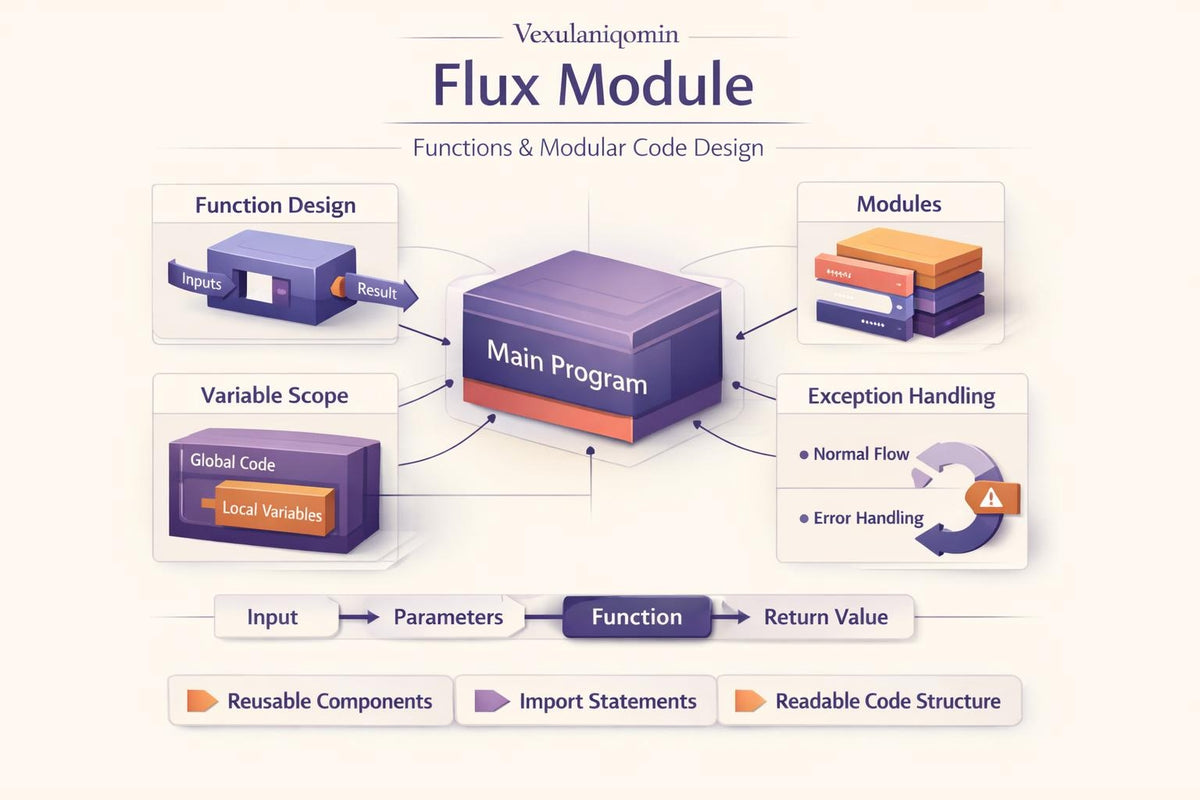
Flux Module presents a structured approach to organizing Python programs through functions and modules.
The course explains how to define clear responsibilities for individual functions, manage parameters and return values, and arrange related programming operations into separate components.
Practical exercises demonstrate how modular techniques can be applied to small programming projects, encouraging learners to examine code organization and understand the relationships between different sections.
What's Inside
- Detailed exploration of Python function design.
- Positional, keyword, and default parameters.
- Return values and function composition.
- Local scope and variable relationships.
- Introduction to Python modules.
- Organizing related functions into separate files.
- Import statements and module organization.
- Working with reusable programming components.
- Introduction to exception handling.
- Techniques for improving code readability.
- Practical modular programming exercises.
- Certificate of completion.
Who Is This For?
Flux Module is intended for learners familiar with Python fundamentals, including variables, loops, conditions, functions, and common data structures.
It is suitable for individuals interested in organizing larger coding exercises, reducing repeated instructions, and understanding how separate code components work together.
What You'll Learn
Through the course materials and exercises, you'll explore how to:
- Design functions with clearly defined responsibilities.
- Use positional, keyword, and default arguments.
- Return values and combine function operations.
- Understand variable scope and function boundaries.
- Organize related functions into Python modules.
- Import and use functions from separate files.
- Identify repeated code and develop reusable components.
- Apply introductory exception-handling techniques.
- Separate data processing from other program operations.
- Trace information passed between functions.
- Review modular code for readability and organization.
- Build small programs using multiple connected modules.
Guarantee
14-Day Refund Policy
Flux Module includes a 14-day refund request period. Learners may submit a refund request within 14 days of purchase, subject to the eligibility requirements and conditions described in the store's published refund policy.
Purchase Information
Course topics, included materials, and learning objectives are presented before checkout. Learners can review these details alongside the applicable refund conditions before placing an order.
What format are the courses provided in?
What format are the courses provided in?
Our courses are provided as digital learning materials organized into structured sections. Each tier contains explanations, practical examples, and exercises related to its programming topics.
Can I study at my own pace?
Can I study at my own pace?
Yes. Our course materials are designed for independent study. You can read through the modules, revisit individual concepts, and complete exercises according to your own schedule.
Do I need previous programming knowledge?
Do I need previous programming knowledge?
The required background depends on the course tier. Introductory materials focus on foundational concepts, while later tiers explore more detailed programming topics. Each course description explains its intended audience.